Stepping out of silo thinking: Henkel’s data quality story


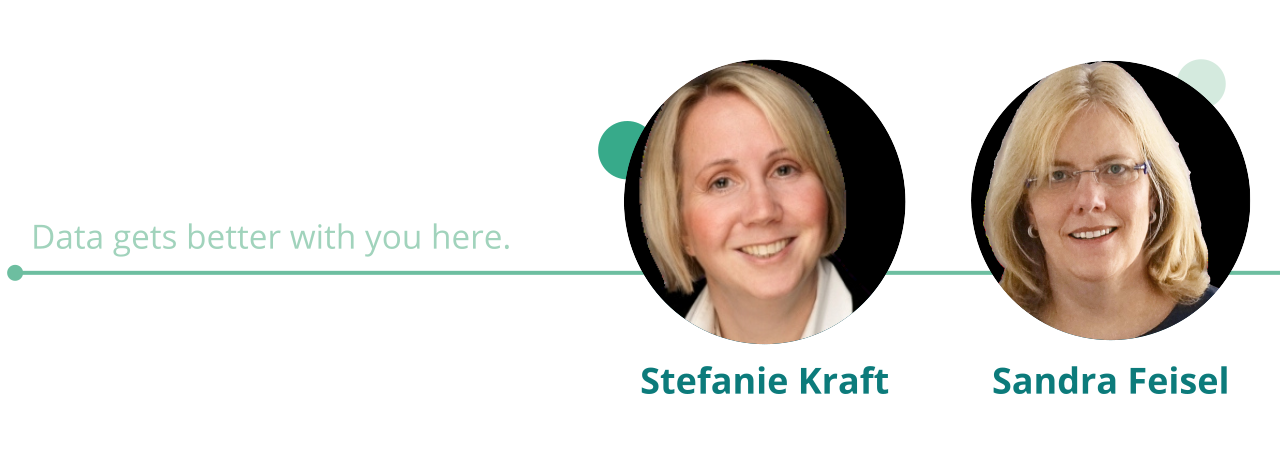
We recently welcomed Henkel’s master data experts, Sandra Feisel and Stefanie Kraft, for a candid discussion about their organization's data quality transformation. It was a refreshing look at how a global leader, a “big ship" celebrating 150 years anniversary, tackles an immensely complex data landscape.
Among their inspiring data insights, our guests introduced strategic choices to manage one of the costliest master data problems: the duplicates. Why the focus? As Henkel operates across two very different markets, industrial adhesive technology and global consumer brands, this diversity meant their customer and prospect data was constantly threatened by silos, fragmented entry points, and different systems.
As a result, the risk of creating costly duplicates was extremely high, and didn’t just end at onboarding. As the team explained, cleansing efforts become exponentially more expensive the further along the value chain the duplicate is discovered.
Start small, evolve further
Instead of pursuing a massive, traditional MDM implementation, the team chose to leverage their existing technology backbone. A service-oriented approach built on independent APIs allowed them to connect and enforce quality rules consistently across six different systems and approximately 6,000 users.
This API strategy created the essential foundation for a long-term vision:
- A centralized Golden Record, serving as single source of truth for all customer and prospect data, drastically reduced creation of new duplicates.
- The ability to easily connect and disconnect trusted external sources, ensured maximum flexibility to adapt to changing regulatory or business needs.
The heart of Henkel’s journey was the move from costly cleanup to proactive measures. They embedded fraud prevention capabilities from CDQ to focus on their more critical vendor data and to identify and flag fraudulent bank accounts at the point of data creation. This defense mechanism is powered by a community-driven scoring model and leverages data sharing approach to a stronger fraud resilience in B2B ecosystems.
Another brilliant example of bringing more trust to the data core at Henkel: automated maintenance of master data updates via CDQ software. In this process, proactive, ongoing checks against highly trusted legal registers allows them to identify and prevent transactions with high-risk, insolvent suppliers, and thus significantly de-risking financial exposure.
Collaboration is key
Rich in substance and insights, the session wasn't just about technology. The entire conversation with Henkel ladies was a candid take on the realities of change management. Lessons shared by Sandra and Steffi were very honest and can be deeply relatable:
1. They spoke about the approach to convince C-level stakeholders, requiring them to focus on clear, measurable cost reduction KPIs.
2. They also shared thoughts around a classical business vs data challenge: the ongoing difficulty of training and changing habits for field salespeople who are generally more focused on speed, rather than the quest for reducing duplicates.
3. Last but not least, the Henkel ladies mentioned the profound value of CDQ's Data Sharing Community, which provides not just technical integration but field expertise and collective defense measures.
A very special thank you to our amazing guests!
Get more insights into Henkel’s journey
This story offers an inspiring hands-on example for any large organization facing data fragmentation. The conversation with Sandra and Steffi covers the complete blueprint: from the POC and the initial arguments for investment to the technical connection to their new MDG system
To get a full understanding of the architecture, the specific technical process flows, the compelling business arguments used, and the great collaboration between Henkel team and CDQ watch the full recording on demand. Click here to access now!
Data Quality as a Service: Henkel's strategic powerhouse



Get our e-mail!
Related blogs

8 Things CDOs should know about cloud data quality
Migrating to the cloud amplifies existing data quality issues. Without proactive governance, bad data multiplies faster across distributed cloud environments,…

What Is AI-Ready Data?
A Practical Definition (and Checklist) for Enterprise Teams. AI-ready data is not the same as clean data, and that distinction is why so many AI initiatives…

One Call Sign, Two Aircraft: Why Identity Is the Foundation of Every Data Strategy
Data governance has one core job: to keep every object an organisation decides on, a customer, a supplier, a product, uniquely identifiable across systems,…