The Power of "Data Sharing" in a Fragile Global Supply Chain


Global supply chains are no longer predictable systems. They are reshaped by geopolitical tensions, regulatory changes, and sudden market disruptions. For enterprise leaders, this creates a clear challenge: how do you maintain continuity when your supplier base can change overnight? The answer increasingly comes down to data. Not just having data, but having access to reliable, up-to-date business partner data at the exact moment you need it.
Most enterprises have made significant progress in master data management. Nonetheless, business partner data often remains fragmented across systems, regions, and teams. This becomes a serious issue when conditions change quickly. In times of geopolitical instability, companies may need to:
- replace suppliers in affected regions
- onboard alternative partners within hours or days
- update critical data such as bank details, certifications, or ownership structures.
The Hidden Cost of the "Data Ownership" Silo
If this information is outdated or trapped in silos, response time slows down. In today’s environment, delays translate directly into risk and a negative impact on the bottom line.
The traditional approach is simple: each company collects and maintains its own supplier data. In reality, this leads to duplication on a global scale. Multiple organizations verify the same suppliers independently. Each performs identical checks, invests in similar resources, and still faces inconsistencies, meaning this model is not built for speed or resilience.
When geopolitical conditions shift, supply chains must adapt immediately. A region can become inaccessible; a supplier may no longer meet compliance requirements and payment risks can increase overnight.
In these situations, companies need to:
- identify alternative suppliers quickly
- validate their legitimacy and compliance status
- integrate them into operational systems without delay.
A The CDQ Data Sharing Community: An Extension, Not a Replacement
Data sharing is often misunderstood as a standalone solution. In reality, it works best as an extension of strong data management practices. At the same time, it is important to stay clear on what truly solves the problem.
A data sharing community adds value, but it does not replace the fundamentals. The real foundation is a clean data base combined with the agile use of trusted external sources. This is the approach that CDQ follows consistently. Our Data Sharing Community then builds on top of this, extending reach, speed, higher quality and more trustworthiness, especially for areas where no offical register exists.
By automating the maintenance of your customer and supplier master data with peer-validated records and automated rules, we help you move from reactive cleansing to proactive governance. This is what we call All Time Right. When your foundation is accurate right from the first time and is permanently monitored, your supply chain can finally withstand the pressure of the next disruption.
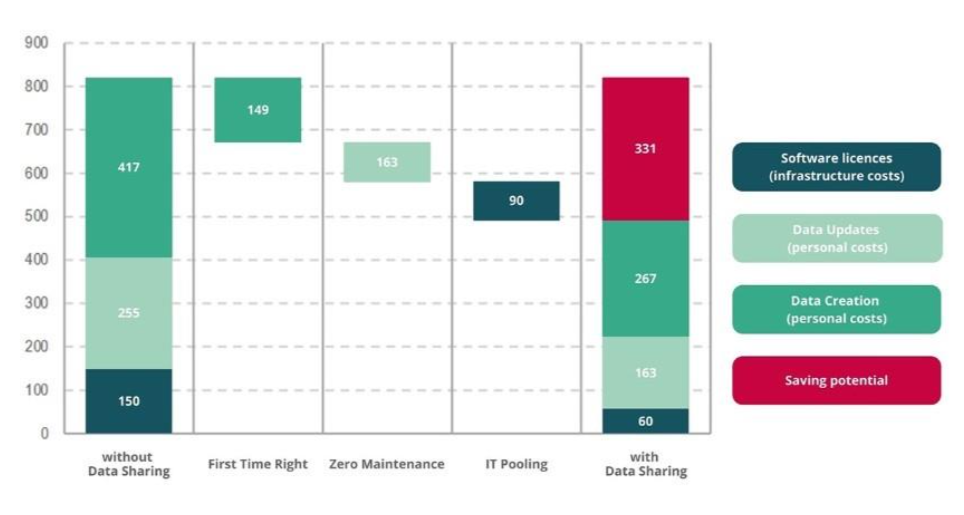
CDQ All Time Right and its uniqe Data Sharing Community allows companies to:
- access pre-validated business partner data
- benefit from continuous updates contributed by other participants
- reduce duplication of validation efforts across organizations
- save money and time to focus on more strategic aspects of the business.
The key is that the data being shared is already governed and enriched. This ensures that sharing improves quality instead of spreading inconsistencies.
From "Owning" Data to "Sharing" Quality and Compliant Data
In other words, the paradigm is shifting toward collaborative intelligence and the logic behind it is simple: raw data is not a competitive advantage: the speed and accuracy with which you act on it is.
For example, if a supplier in a volatile region changes their bank details or loses a critical certification, the community knows instantly. You no longer have to "hunt" the truth because the truth is pushed to your system. The global supply chain is only as strong as its weakest link and very often, that link is a corrupted data record. In an era of constant disruption, being part of a Data Sharing Community is extremely helpful, but at CDQ, we know that sharing is only part of the solution.
True resilience isn't just about belonging to the community; it's about building a clean data base that remains accurate from the moment of entry as many organizations still struggle with fragmented and inconsistent business partner data. Supplier and customer records are duplicated, outdated, or incomplete across systems. This creates friction in everyday operations. It also becomes a serious risk when conditions change quickly.
The question is no longer "How good is your data?" but "How connected is your intelligence?"
To thrive in 2026, forward-thinking organizations need to switch from the "Ownership Model" of data toward a “Data Sharing Community” that treats accuracy and security as a collective asset. By embracing the network effect it is possible to navigate global volatility with a level of transparency and speed that was previously impossible.



Get our e-mail!
Related blogs

8 Things CDOs should know about cloud data quality
Migrating to the cloud amplifies existing data quality issues. Without proactive governance, bad data multiplies faster across distributed cloud environments,…

What Is AI-Ready Data?
A Practical Definition (and Checklist) for Enterprise Teams. AI-ready data is not the same as clean data, and that distinction is why so many AI initiatives…

One Call Sign, Two Aircraft: Why Identity Is the Foundation of Every Data Strategy
Data governance has one core job: to keep every object an organisation decides on, a customer, a supplier, a product, uniquely identifiable across systems,…